Ecommerce replatforming: keep your traffic and sales
TL;DR: Ecommerce replatforming moves your shop onto new ground without moving your buyers: the addresses that bring traffic today keep bringing it after the switch. Planning is one week at $2,500, the build starts at $8,000 over two to ten weeks, and you sell throughout.
A move earns its keep when one thing your shop cannot do costs you more every month than changing it would. That is the test we apply in the first week: not whether the platform you are on is old, but whether the work it forces on your team has a price you can read. The verdict is written, and you keep it whether or not you carry on with us.

What this includes
- A written plan: what moves, what stays exactly as it is, and the order the work happens in
- Every address that brings you buyers today, written down beside the address it becomes, and checked twice before the switch
- Products, customer accounts, their past orders and their gift cards copied across and counted, line by line
- A shop that opens as quickly on a phone as the one you have, measured the way Google measures it
- A switch date you choose, outside November through April
- The old shop left standing and unchanged for the first month after the switch
- A written record of what was done, so whoever you hire next can carry it on without us
Everything on that list stays with you after the planning week, whether or not the build follows.
What an ecommerce replatforming project changes
Shops rarely move because a platform is old. They move because one daily task costs too much: a bill that grows with every feature switched on, a payment method the checkout will not take, a price list per customer type that someone keeps by hand every week.
The words used for this work are loose. Some firms sell ecommerce migration services, others sell a rebuild, and most end in the same place: a shop on new ground with its buyers still arriving. What separates a move that holds from a move that costs six months of orders is rarely the tooling. It is the address list. So when you compare what is on offer, ask every supplier one question: who owns the list of addresses that earn you money today, and what happens to it on the day of the switch.
Two dates matter more than the others, and both are yours to pick. Miami's season starts in November, and a switch in the middle of it hands your best weeks to the least tested version of your shop. The second date is the day the old shop stops taking orders. We do not ask you to guess either one alone: the plan proposes a window, you decide, and the two shops overlap for long enough that the decision stays reversible.
Two destinations exist, and only two. One is a ready-made shop you rent, quick to start and quick to leave. The other is a shop you own, where no fee follows every order you take. Where your shop is going is a decision you can read up on, so what the platform itself says about moving is worth twenty minutes of your evening.
Where neither road holds your rules, rules no platform will hold is the way out, and when the shop you move to has to be yours is our usual road. We say which one fits in the planning week, and we put it in writing.
How it works
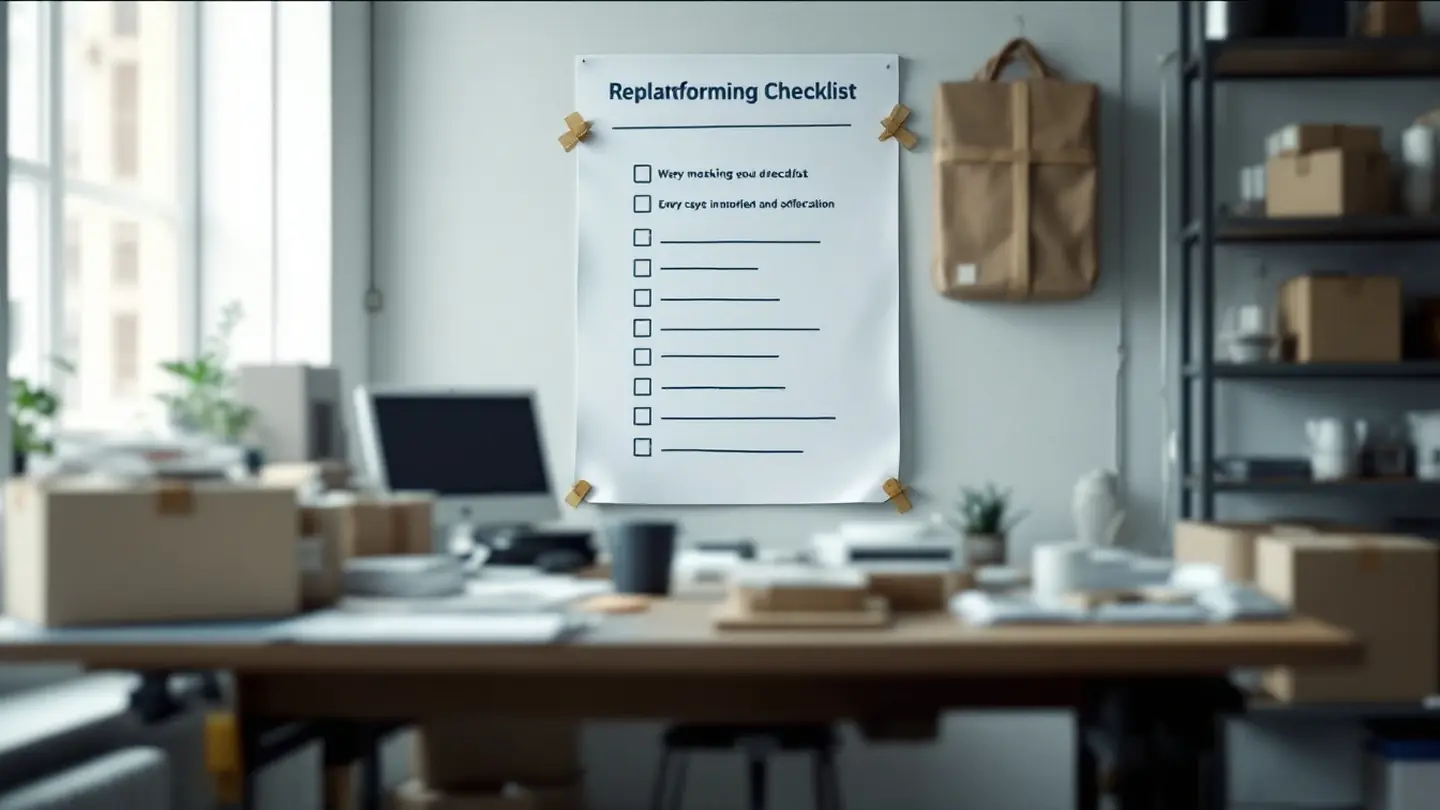
Every stage has a duration and a price before it starts, and the plan is written by the person who reads the work before it ships.
- Discovery, one week, $2,500. We walk your shop the way a buyer does, order by order, and note every place the platform makes your team work around it. What the shop earns, what it spends, and the number we are trying to move. You keep the document either way.
- Architecture, the same week, $2,500, credited to the build. What moves, what stays untouched, the price and the duration of each stage, and how the result gets measured once it is live.
- The build, two to ten weeks depending on scope, from $8,000. Your products, your customer accounts and their past orders go across to a test address, where you place real orders from your own phone every Friday instead of looking at screenshots.
- The address list, before the switch. Every address that earns you visitors is written beside the address it becomes, and each pair is opened and confirmed before a single one moves. The list is checked twice, against Google's own guide to moving a site rather than against our own method.
- The switch, about a week, included. We fix a date together and move on it, outside November through April. Order totals are compared with the old shop before that day, and both shops run side by side until they agree.
- The first month, included. The old shop stays standing and read-only for thirty days, so nothing about the move is one-way. A short weekly note tells you what came in, what behaved differently, and what was fixed.
- Care, from $1,500 a month, optional. The weeks after a move are when the odd order behaves differently, so monitoring, small changes and a monthly block of work sit on one line if you want them. A month of notice on either side.
Speed is what a buyer feels on a phone, so what we report is the numbers Google measures, not a score of our own.
What it costs
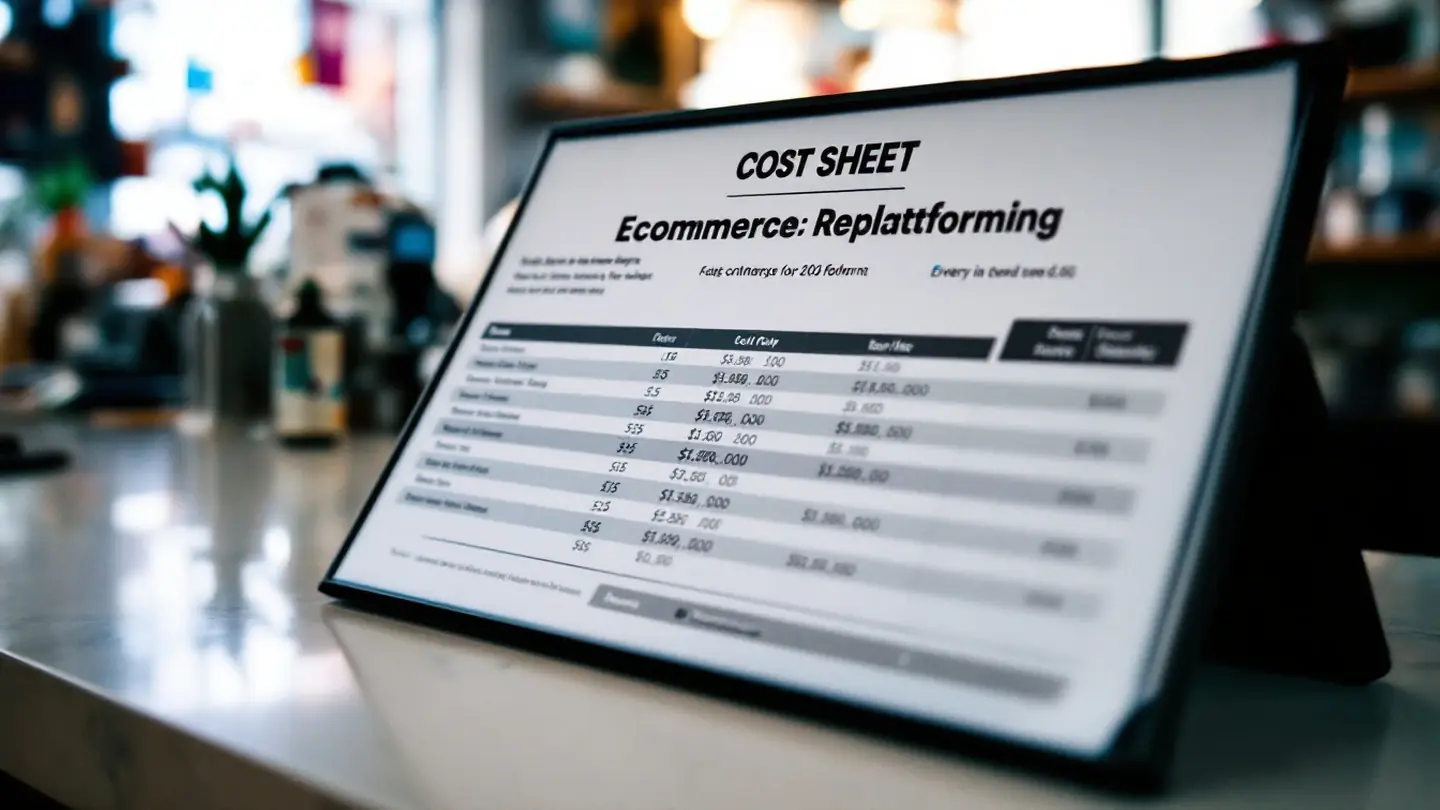
Nothing on this page is priced after a phone call. The figures below are the published starting points of each stage, and your scoped quote sets the perimeter, the final price and the dates, after which they stay put.
- Discovery: $2,500 for one week, ending in a written verdict on the shop, its orders and the stages that would follow.
- Architecture: $2,500 for one week, credited against the build.
- Build: from $8,000 across two to ten weeks, priced stage by stage, so each payment follows finished work.
- The move and the switch: included in the build, with the address list checked before and after.
- Care: from $1,500 a month, which you can leave with a month of notice.
We take no cut of what your shop sells.
Where your shop lands inside those spans comes down to two things you can weigh before you call. The first is how much of your catalogue is usable as it stands: products with real photographs and real descriptions go live at the short end, while a catalogue that lives in a spreadsheet pushes the other way. The second is how many rules the platform has to hold that a standard shop will not: three delivery zones and a pickup counter are a shorter build than a price list per customer type and a return flow that pays out in credit. We name which one you have in Architecture, not halfway through the build, because that is when changing the answer is still cheap.
Every phase and its published price is set out in the same form on one page, and what a move actually costs, line by line is written out in full for the phases that surprise people.
Proof
Before any work starts, we set the measurement. Three things go into the written record: the addresses that carry traffic today, the speed of the shop on a phone, and the order totals that have to agree on the new ground. It is short, and it is what the switch is judged against.
Food By Box carried 2,500 products in a shop that had stopped keeping up. After the move, Google measures its desktop speed at 95, the visits it takes each month went from 20,000 to 500,000 inside 24 months, and not one address that brought buyers was dropped. The numbers behind these moves are published project by project, not summarised.
Tatiana Miath is the same work at a different size. Her store took 4.8 seconds to open on a phone, and it now opens in just over one, with nothing she ranked for lost in the move. The two projects differ in nearly everything except the part that matters here: the traffic that came in before still comes in.
Michael Agnassia, 15 years in ecommerce, writes the plan and reads the work before it ships, and who writes the plan and signs it off is on our about page. We work from 78 SW 7th Street in Brickell, on site across South Florida, in English and Spanish, and site visits happen when a delivery needs someone in the room.
No page about this work should promise you a position in a search result or a revenue figure, and ours does not. What we put in writing is the measurement: the addresses that earn you money, the price of each stage, and the number we are moving.

Questions
What does ecommerce replatforming cost us, all in?
Discovery is $2,500 for one week and the document is yours either way. Architecture is $2,500, credited to the build. The build starts at $8,000 and is invoiced stage by stage, the move and the switch are included, and care starts at $1,500 a month.
Will we lose the search traffic we already have?
That is the part of a move we plan first and check twice. Every address that brings you buyers gets its match on the new shop, each pair is opened before the switch, and both shops run side by side until the order totals agree. At no point is the old shop the only place your orders live.
How long does ecommerce replatforming take before we sell on the new shop?
The build runs two to ten weeks depending on scope, after the planning week, and the switch takes about a week on a date you choose. You sell from the old shop until that day, and the first month afterwards is covered.
What do ecommerce migration services cover that a self-service tool does not?
A tool will move your catalogue. It does not know which of your addresses earn money, which customer accounts are still live, or what a past order has to look like on the new shop to stay readable by the person who bought it. That is the work a service is for, and it is the work that decides whether the move is quiet or expensive.
Can we buy replatforming services for one phase only?
Yes. Discovery stands alone at $2,500, and the document is allowed to end with the conclusion that two repairs to the shop you already have are enough.
Can we keep selling while this happens?
Yes. Your shop stays open until the day you choose, and both run side by side before that, so you compare real orders rather than a demonstration. Nothing is switched off in advance to make the move easier.
Should we move everything at once?
Not always. A common sequence is to change the shop your customers see first and move the rest afterwards, which spreads the cost across two budget years and puts less at risk in a single week. The address list work is the same either way, and it is the part that protects the traffic.
Next
- The headless practice, and where this work sits beside the others
- Book the scoping week: one week at $2,500, ending in a written answer either way
Next step
Send us the number you are trying to move and the current stack. We answer with a scope, a timeline and a price.
Talk to us