Web design Miami

TL;DR: Web design Miami built around one number: how many visitors do what the page asks them to do. Every page gets a single action, agreed in writing before design starts, and the path is checked on a live address before launch. Prices are published on this page, not behind a form.
What this includes
Website design in Miami is usually sold on how a page looks. We build it around the decision your visitor has to make: before a page is drawn, we write down what it answers, who it is for, and the one thing it asks the reader to do. Forms get the same treatment as the pages that hold them, because a form is where the action usually ends (how forms are built so people finish them). If you already have a site, Discovery is the week that measures what your current site costs you, and it runs before any drawing.
A page that informs and a page that asks are not the same page. Most sites you have seen are a list of everything the business does, with a contact link at the bottom, and the visitor is left to work out what to do next. On the pages we sell from, the ask is visible before the reader scrolls, it is the same ask everywhere on the page, and the rest of the text exists to remove the reason not to do it. That is the whole method, and it is decided in the second week, not in the design meeting.
- A written decision per page: what it answers, who it is for, and the single action it triggers
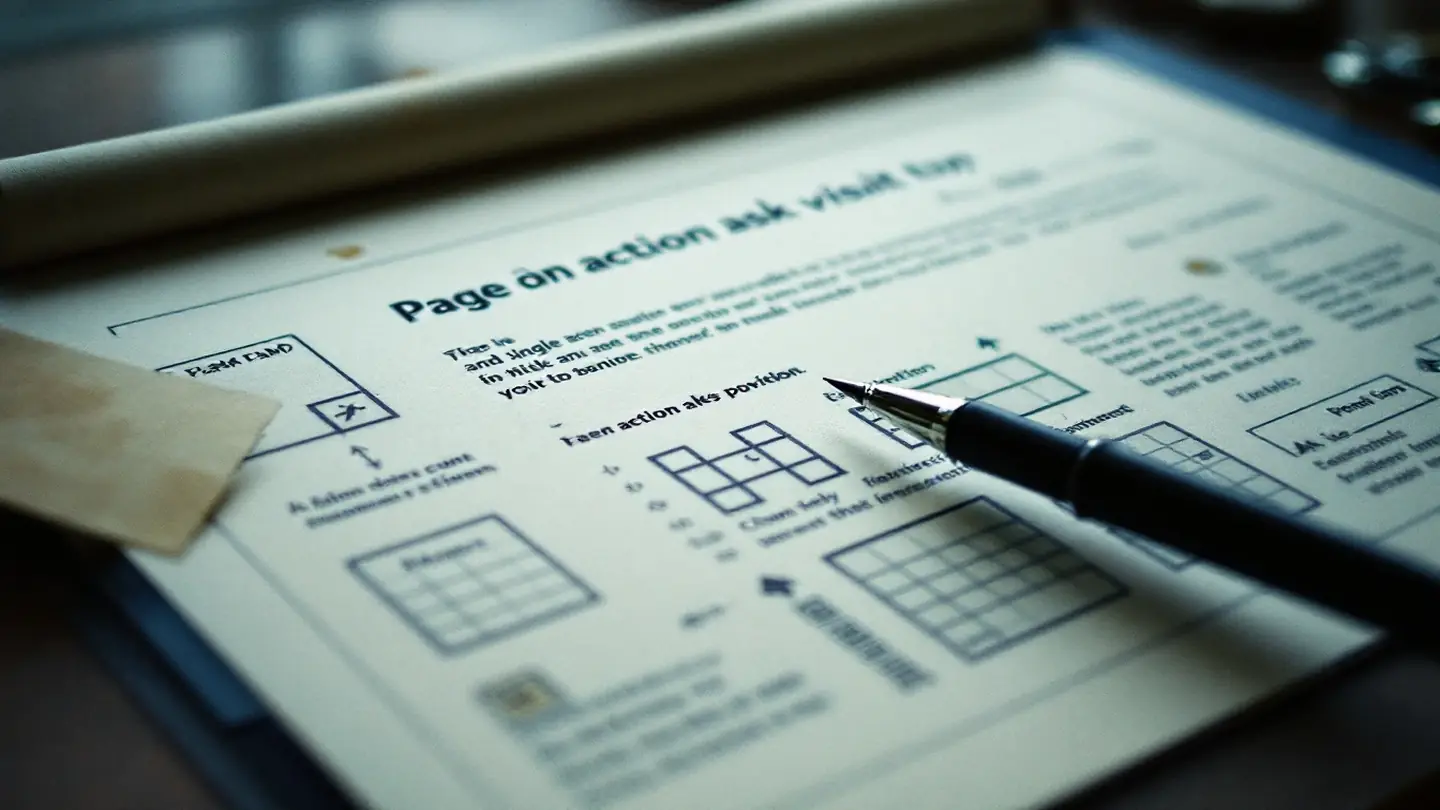
- A page plan you can mark up in pen, then the real page on a live address, so nothing is approved from a picture
- The action, and the way it is counted, agreed in writing before the first drawing
- A speed budget in the scope: the pages that sell score above 90 on Google's speed test, measured on a phone at 390 pixels wide
- The path completed by hand before launch: form to inbox, call to booking, order to confirmation
- A structure you can defend in a meeting: which pages exist, which are merged, which are removed
- Your domain, your hosting and your site's files in your name, handed over with the work
How it works
The work runs in five phases, the same ones as every project in the studio, and the second one is where your site is actually decided. It is also the phase most projects skip, which is why so many rebuilds end up looking different and selling the same.
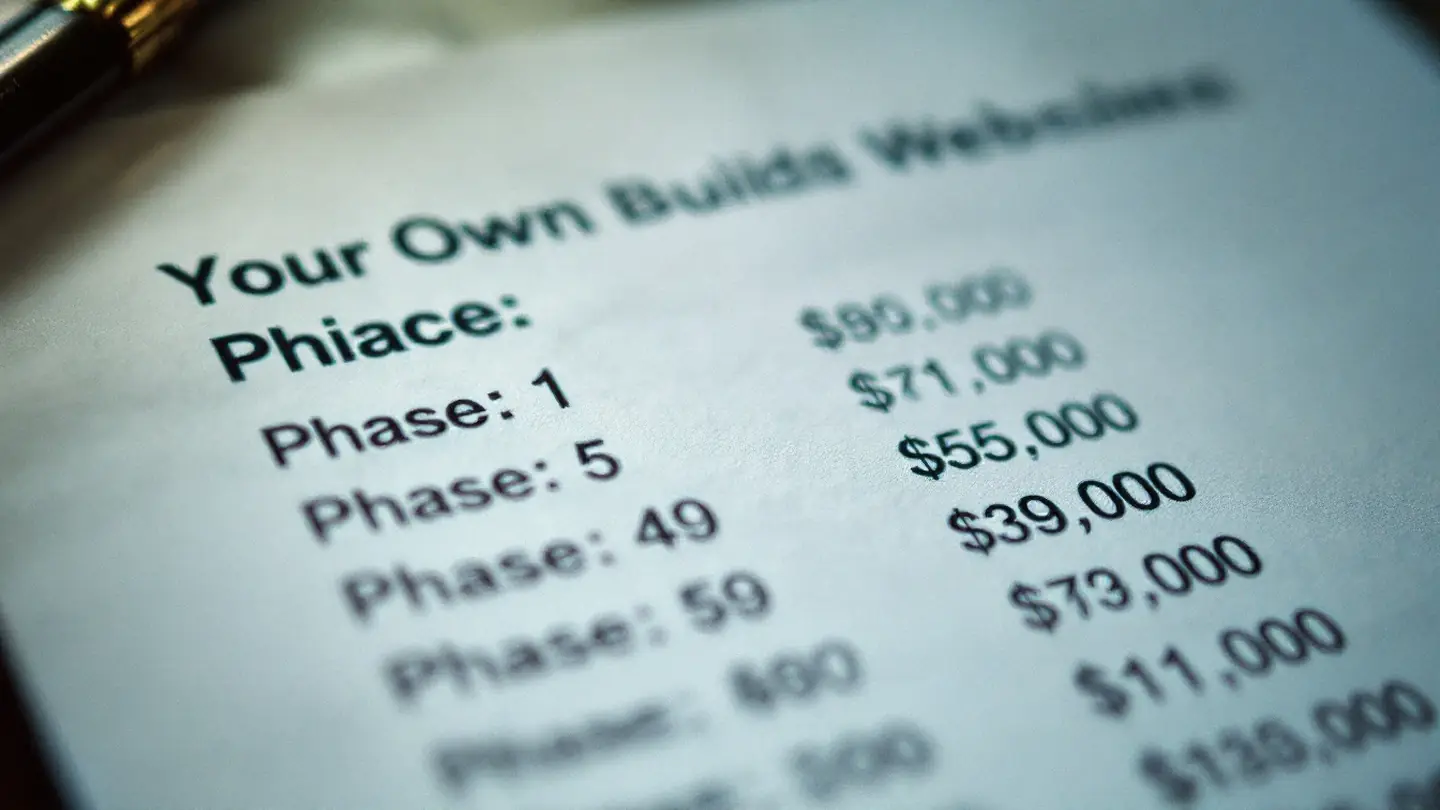
- Discovery, 1 week, $2,500. We read the site you have today against the visits it receives: which pages earn visitors, which earn enquiries, and what the gap costs. You end the week with a written verdict and a price, not an estimate.
- Architecture, 1 week, $2,500, credited to the build. This is the week the site is decided: which pages exist, what each one answers, and the single action each one triggers. The number we are moving is written here, with the way it is counted, before design starts. The order the phases run in is published with its prices, and it does not change once your scope is signed.
- Design and build, 2 to 10 weeks, from $5,000. Design on paper first, then the real page on a live address you can open on your own phone. A release goes out every week, so you review the site as it is built instead of a picture of it.
- The path check, inside the build. Before launch we complete every action of the site by hand, from a phone: the form, the call, the booking, the order. A message that lands in the wrong inbox, or a confirmation that never arrives, is a defect and not a detail. The person who wrote the architecture signs this off, and never someone who has not touched the site. Michael Agnassia, fifteen years of ecommerce work, writes the plan and reviews the build before launch (who signs the build); a studio that hands the review to someone who never saw your project is selling you a handover, not a site.
- QA and launch, 1 week, included. Every address that brings you visitors today is listed next to the address it becomes, then checked before the switch. The cutover is staged, outside your busiest weeks, with a way back if anything looks wrong.
- Care, monthly, from $1,500. Monitoring, content changes and small fixes, with 30 days notice either side. You keep everything you need to leave, including the reporting account where the actions of each page are counted.
The site is drawn at phone size first, because a layout that works on a phone works everywhere (why a phone first layout is an accessibility choice), and the phone is where your customer decides.

What it costs
These web design Miami prices are the prices of each phase, published the way the rest of this site publishes them. Your scoped quote fixes the exact perimeter, the price and the timeline, and it does not move afterwards.
- Discovery: $2,500 for 1 week. A written verdict on your site, its visitors and its conversion path.
- Architecture: $2,500 for 1 week, credited against the build. The pages, the action each one triggers, the number we are moving and how it is counted.
- Design and build: from $5,000, over 2 to 10 weeks depending on scope. The number of pages, and the tools your team already uses, decide where you land in that range.
- QA and launch: included in the build. The address list, the checks on several phones, the staged switch.
- Care: from $1,500 a month. Monitoring, content changes, small fixes, and 30 days notice either side.
Two things move the price more than anything else, and you can check both before you call. The first is how many different pages your business actually needs: five kinds of page cost less than fifteen, and most of the fifteen are usually two pages wearing different titles. The second is how much of the content already exists. A catalogue with real photographs and real descriptions can go live in the short end of the range; a site where every word has to be written with your team takes longer, and we say so in Architecture rather than halfway through the build.
There is no quote form on this page, because you cannot decide without a number. What you are buying is the work on the page, not hours: what a signed scope does and does not include is written down before you commit.
Proof
Food By Box sells 2,500 products from a storefront we rebuilt around its catalogue. Google's speed score reached 95 on desktop, and monthly visits moved from 20,000 to 500,000 over 24 months. Every address that carried traffic was listed before the switch and kept working after it, which is what Google asks for when addresses change.
On an independent artist's shop in Florida, the load time on a phone went from 4.8 seconds to just over one second, and no ranking was lost in the move. Neither project was rescued by a new look: both were measured, and the measurements are the reason the numbers are here.
Both projects were judged on the same thing, and it is the thing we agree with you in Architecture. A page that collects an enquiry is judged on the enquiries that reach the inbox. A page that sells is judged on the orders that complete. You read those counts in your own reporting account, in the same place we do: if nothing moves, you find out without asking us.
The full numbers behind that rebuild
What we cannot promise is a position in Google or a sales figure, and you should distrust a web design Miami page that promises either. What we put in writing before design starts is the measurement: which pages exist, what each one asks the visitor to do, and the way it is counted.

Questions
What does web design in Miami cost?
Discovery is $2,500 for 1 week, Architecture is $2,500 credited to the build, and the build starts at $5,000 over 2 to 10 weeks depending on the scope. Care starts at $1,500 a month after launch.
What should you ask the Miami website designers quoting you?
Ask each of them for three things: the price of each phase, who writes the plan, and how the page's action is measured before launch. If a studio quotes one number for everything, keeps the files, and only talks about how the site will look, both the cost and the exit stay unknown.
Which pages does a rebuild keep?
The pages that earn visitors, plus the pages your customers need. Some are merged, some are removed. The list is written in Architecture, and you approve it before anything is designed.
How is the conversion measured before launch?
We agree the action each page triggers, then complete that action by hand on a live address: form to inbox, call to booking, order to confirmation. The count is set up in the reporting account you own, so it is visible to you from day one.
Will a new site lose the rankings the old one has?
Every address that brings you visitors today is listed next to the address it becomes, and checked before the switch. On the Food By Box rebuild, every address that carried traffic was kept.
Will the pages be usable on a phone in Miami?
The site is designed at 390 pixels wide first, and tappable areas are at least 44 pixels, the level the target size guidance behind 44 pixels sets. The speed budget is written into the scope and measured before launch, on a phone, on a normal connection.
Do you meet in Miami?
Yes. The studio is at 78 SW 7th Street in Brickell, we work US Eastern hours, and we work in English and Spanish. Local kickoffs, plan reviews and launches happen in person, and remote clients get the same weekly release online.
Next
- What happens on the build side once your pages are live and you keep publishing
- How the studio works, with the South Florida work and the studio in Brickell
- Book the week that tells you what to change: Discovery, 1 week, $2,500, and a written answer at the end of it
Sources
- Nielsen Norman Group on web form design
- Google Search Central on site moves and address changes
- W3C Web Accessibility Initiative on target size
- MDN Web Docs on accessibility